WELCOME TO OPERATIONAL EXCELLENCE PLATFORM
We help organizations turn everyday operational reporting into structured continuous improvement.

What is Amphory?
Amphory is a platform that gives organizations clearer visibility, better accountability, and a stronger foundation for continuous improvement and AI readiness. Performing regular audits, quality controls, or safety inspections? We help you move from paper forms and disconnected files to digital workflows that capture work in a structured, searchable, and connected way. Use digital checklists, connect incident reporting, and standardize root-cause analysis in one operational workflow. We strongly believe continuous improvement is sustainable only when reporting is simple enough to complete during daily work.
Where to start?
You don't need to digitize everything. Start alone and invite your team later. Start with one recurring control (for example, a Weekly Gemba Walk or Occupational Safety Observation). In what process you would like to start your operational excellence journey?
Maintenance
Structured checklists for maintenance, shutdowns, and TPM.
Logistics
Make loading, inspections, and supplier controls more reliable.
Safety
Keep risk assessments, PPE checks, and permits visible.
Management Systems
Connect audits, management reviews, and continuity planning.
Lean
Use gemba, 5S, VSM, and kaizen to drive daily improvement.
Digital checklists create a continuous improvement ecosystem
Moving from paper to digital is only the first step. Digital checklists work best as part of a wider continuous improvement ecosystem where dashboards and reports make team and organization performance visible, so leaders can spot trends, steer action, and improve where it matters most.
In which of your daily workflows do you see the most challenges?

Checklists & built-in corrective actions
Digital checklists with built-in corrective actions — close the loop, not just tick boxes. Ensure that deviations are captured and improvements are tracked effectively. Regular audits, pre-trip loading controls or inspections can be integrated seamlessly into your workflow. Measure organizational performance with systematic scoring and reporting.

Observations registration and follow-up
Move from reactive problem solving to proactive improvement by capturing small daily insights. An observation is a simple record of something noticed in the workplace that may affect safety, performance, or work environment. Observations help identify trends and areas for improvement before they escalate into incidents.

Incidents & root-cause analysis
Systematic incident management for safer, more efficient operations. An incident is any unexpected or undesired event that disrupts normal work activities or creates harm, damage, or operational disturbance. Root-cause analysis helps identify the underlying reasons for incidents, enabling teams to implement effective corrective actions and prevent recurrence.
A simple way to get started
Want to test digital quality controls first?
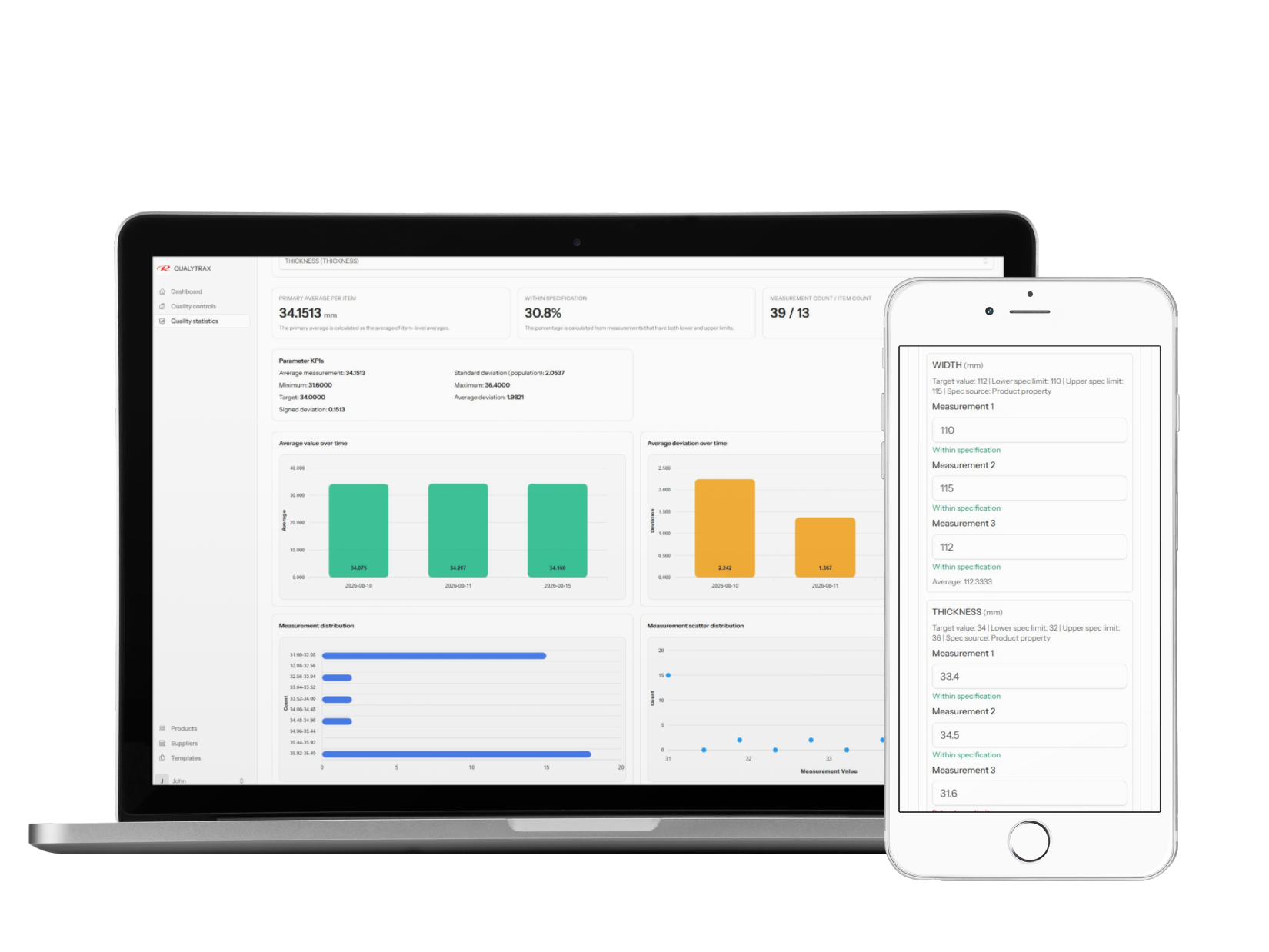
If you want to begin by simply registering quality controls before digitizing your full checklist workflow, Qualytrax is a practical place to start.
Excellence starts with visibility
Most organizations do not suffer from a lack of data. They suffer from data scattered across spreadsheets, emails, paper forms, and disconnected systems. amphory helps operations teams standardize how work is captured across digital checklists, observations, incidents, root-cause analysis, and corrective actions, so information becomes structured, searchable, and connected. When the full operational picture is visible in one system, teams can improve faster today and build a reliable foundation for AI-driven insights tomorrow.
Digitize frontline workflows
Replace paper forms and disconnected files with digital checklists and standardized reporting flows. Capture work consistently across teams so data quality improves from the source.
Create connected operational context
Link observations, incidents, root-cause findings, and corrective actions in one traceable workflow. Turn isolated records into a complete operational story teams can search and act on.
Build an AI-ready data foundation
Structure operational information so trends, recurring failures, and risk patterns are easier to detect. Give future AI and analytics tools reliable, contextual data instead of fragmented inputs.
Accelerate improvement decisions
Use shared visibility to prioritize actions, track follow-through, and measure what changed. Help leaders and teams move from reactive firefighting to systematic continuous improvement.
Start for free with ready-made templates.
Explore our growing template library
Find templates for the topics you want to improve first.
Frequently asked questions
Quick answers for teams evaluating amphory for operational excellence workflows.
What is amphory used for? +
amphory helps teams run digital checklists, capture observations and incidents, perform root-cause analysis, and manage corrective actions in one connected operational workflow.
Who is the platform designed for? +
It is designed for operations teams, supervisors, and managers in maintenance, logistics, safety, Lean, and management system environments that need clearer execution visibility and follow-up discipline.
How should we implement amphory in our organization? +
You do not need a company-wide rollout from day one. Start small in one high-impact area, let one user begin alone, test and refine the workflow, and then invite additional team members once the process is proven.
What exactly will happen after I sign up? +
After sign-up, you can start immediately with a guided first workflow. You do not need to configure everything first, you do not need to invite your team yet, and you can test alone. You can pick one starter template for your use case instead of reviewing all 115 at once, run a real workflow in minutes, and add scoring or critical questions later when you are ready. You can also test with sample content before entering company-specific data.
How does amphory support AI readiness? +
By standardizing operational reporting into structured, searchable records, amphory creates a higher-quality data foundation that future AI and analytics tools can use more reliably.
Can we start with ready-made templates? +
Yes. Teams can start with templates from the template library and then adapt them for their own processes, terminology, scoring rules, and team-level needs.
Does amphory support multi-team organizations? +
Yes. The platform supports multiple teams with both team-level and account-level dashboards, helping organizations standardize reporting while tracking local performance and follow-up.
Is amphory easy to use on mobile devices? +
Yes. amphory is mobile-first, so teams can fill checklists, register observations and incidents, and update follow-up tasks from phones and tablets while working in the field.
Can users upload files and photos directly from mobile devices? +
Yes. Users can upload files and photos directly from mobile devices while filling checklists, observations, incidents, and root-cause records, making evidence capture fast and practical during field work.
Does amphory support a multi-language GUI for internal pages? +
Yes. amphory supports a multi-language interface across internal pages in English, German, Estonian, Finnish, Hungarian, Italian, Lithuanian, Latvian, Norwegian, Polish, and Swedish, helping multilingual teams use the same workflows consistently in their preferred language.
What dashboards are available in amphory? +
amphory provides both team-level and account-level dashboards to monitor performance trends, recurring deviations, and corrective action follow-up.
Is task management centralized across checklists, observations, incidents, and root-cause analysis? +
Yes. amphory centralizes tasks created from checklists, observations, incidents, and root-cause analysis into one workflow. Users get a clear overview of active tasks, owners, due dates, and progress updates so follow-up stays visible and accountable.
How does checklist scoring work in amphory? +
Checklist scoring is based on assessment criteria defined in the template. As reports are completed, amphory calculates scores and ratings so teams can compare results over time, identify recurring weak points, and prioritize improvement actions.
Can amphory automatically require a follow-up task when an answer is not as expected? +
Yes. If a reported answer deviates from the expected criteria, amphory can automatically require a follow-up task before the process is closed. This ensures deviations are visible, assigned, and tracked to completion.
Is there an auto-translate option during template import? +
Yes. During template import, you can use the auto-translate option to generate localized template content faster, then review and adjust wording to match your internal terminology.
Try Amphory in 3 simple steps
- 1. Create your free account
- 2. Choose one of a ready-made templates
- 3. Complete your first real checklist
Takes less than 10 minutes. No credit card or company info required.
Take a look at some checklist focused posters
Quick insights and practical examples for your improvement journey.
Need practical shop-floor guidance? Read our Gemba Walk guide, Value Stream Mapping guide, and Last Minute Risk Assessment (LMRA) guide.